
The Big Community Update | February 2026

We're back! February has been a big one for the Anyteam. We just wrapped up our first Town Hall of the year — and it was a special one. A major desktop release landed right alongside it, and we took the chance to pull back the curtain on how we're thinking about the road ahead: from the way we'll structure our roadmap to a deep architectural shift in how Anytype works.
If you missed the livestream, here's a summary of everything we covered — and what to look forward to in the months to come.
Release Highlights
Our latest Desktop update is built around focus and flow — giving you more control over how you work inside Anytype every day.
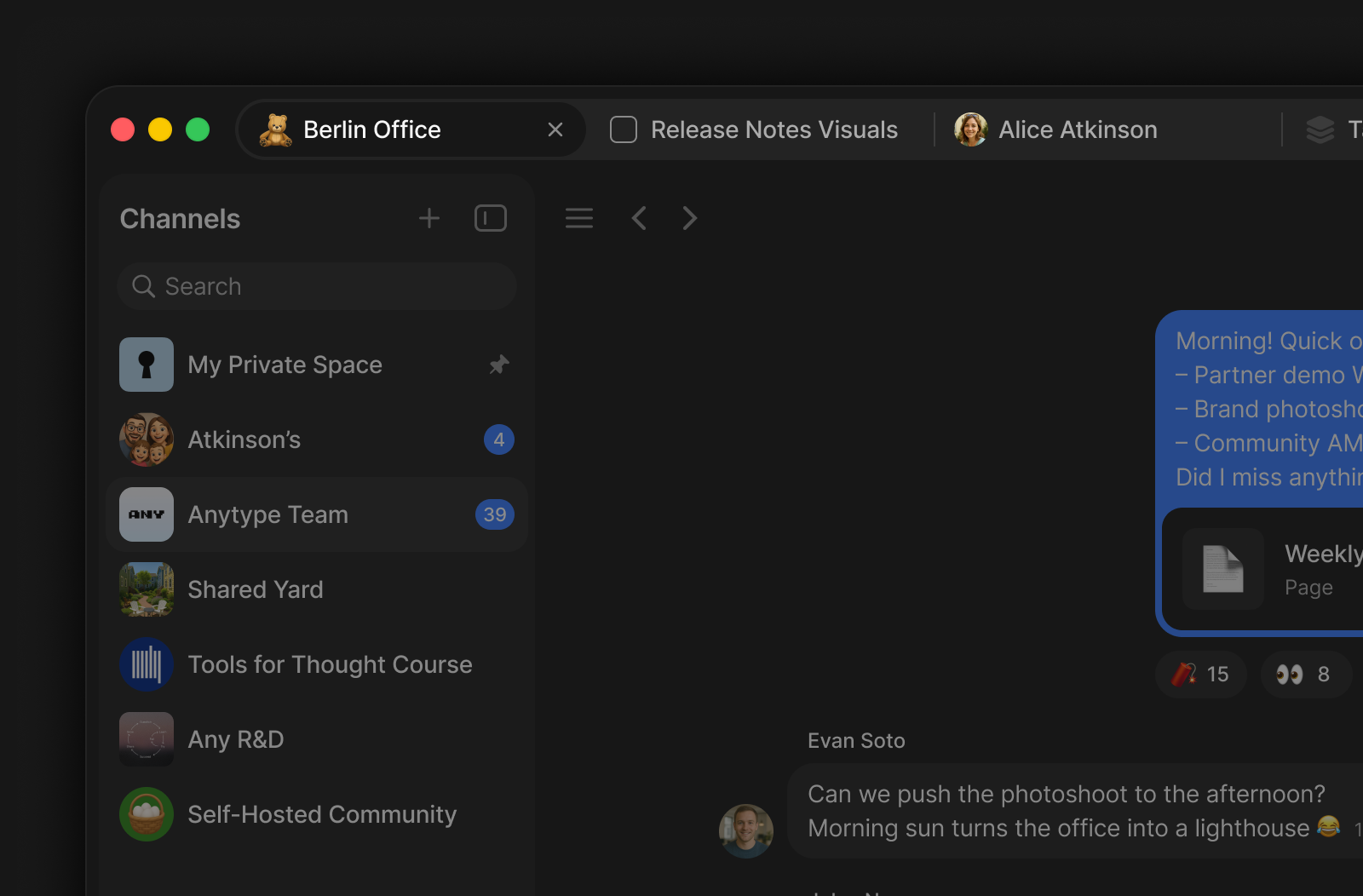
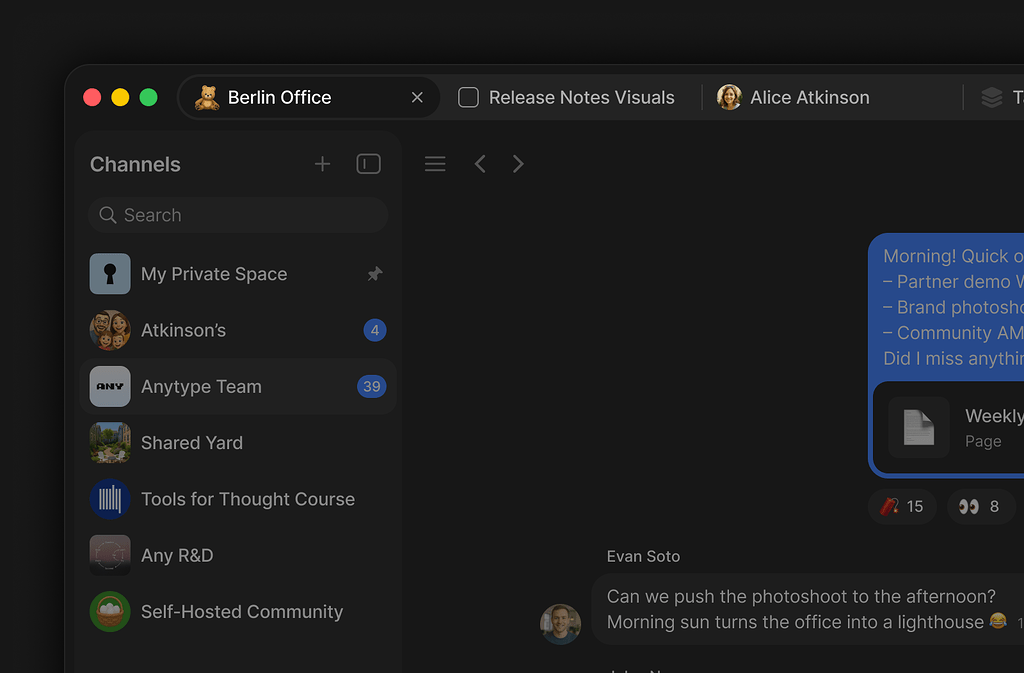
Tabs are finally here. You can now open multiple objects in the same window, drag and reorder them, pin your most-used ones, or pull a tab out into its own window entirely. Tabs even work across different spaces — so your channels, DMs, and documents can all live side by side.
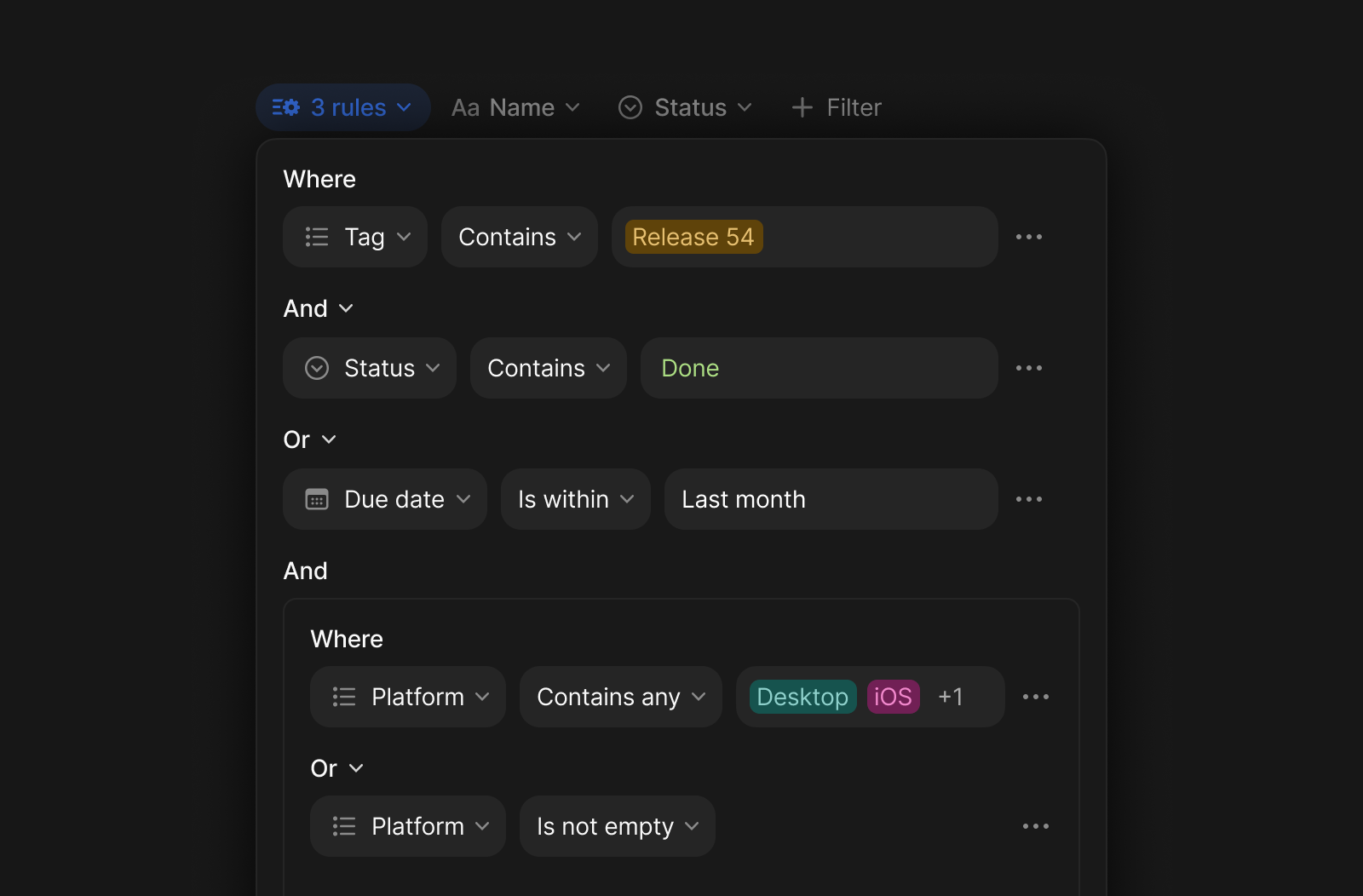
Advanced Filters bring real power to the way you query your data. You can now combine AND/OR logic to build complex, multi-condition views — filtering tasks that are either high priority or due this week, or customers who've spent over a certain amount and made a recent purchase.
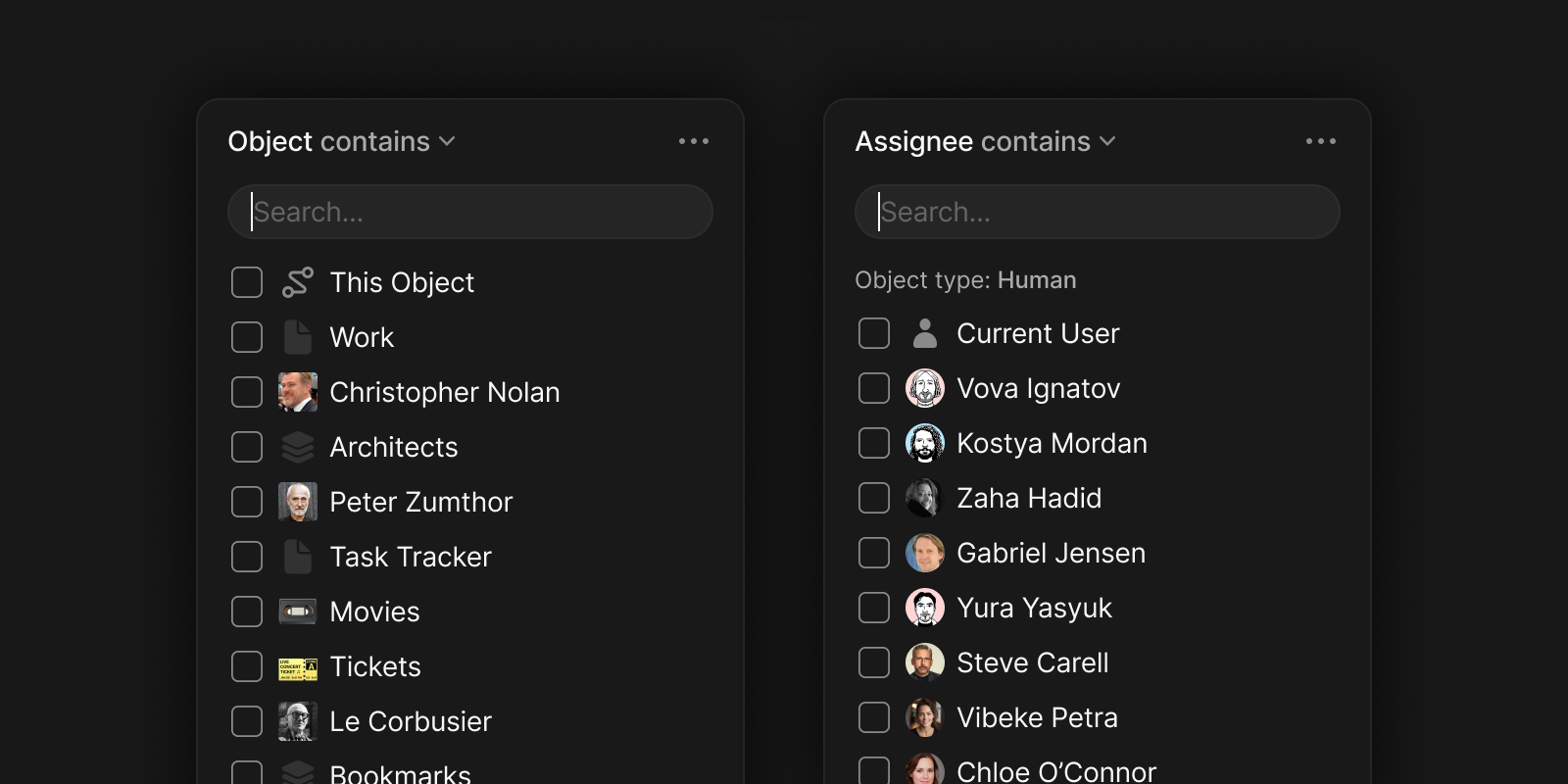
Dynamic Filter Values take things even further. By setting a filter to "Current User" or "This Object," your views now adapt dynamically to whoever is looking at them — or to the context of the object itself. This becomes especially powerful when combined with templates, which is coming very soon.
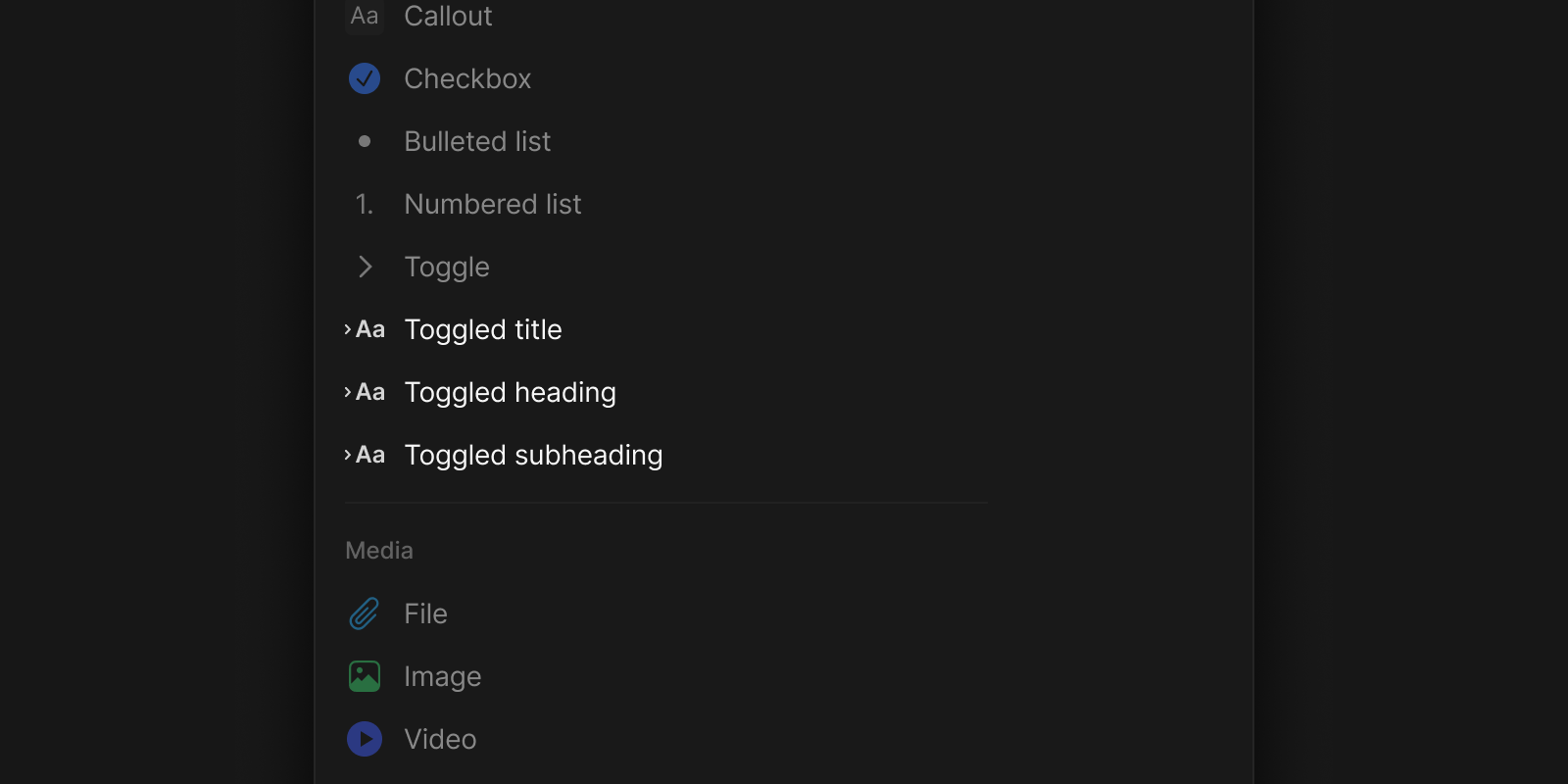
Toggled Headings are a long-requested favourite. You can now create collapsible heading sections in any document, and open or close them all in bulk. Great for navigating large pages without losing your place.
As always, the full release notes are on the forum with plenty more detail on everything that shipped:

Roadmap Update: A New Structure for How We Work
We've been honest with ourselves about something: our roadmap communication hasn't always served you as well as it should. Timelines have slipped, priorities have shifted without clear explanation, and the way community feedback feeds into what we build has been too informal. We want to do better — and we've restructured how we present our roadmap to reflect that.
Going forward, the roadmap is organised into four categories:
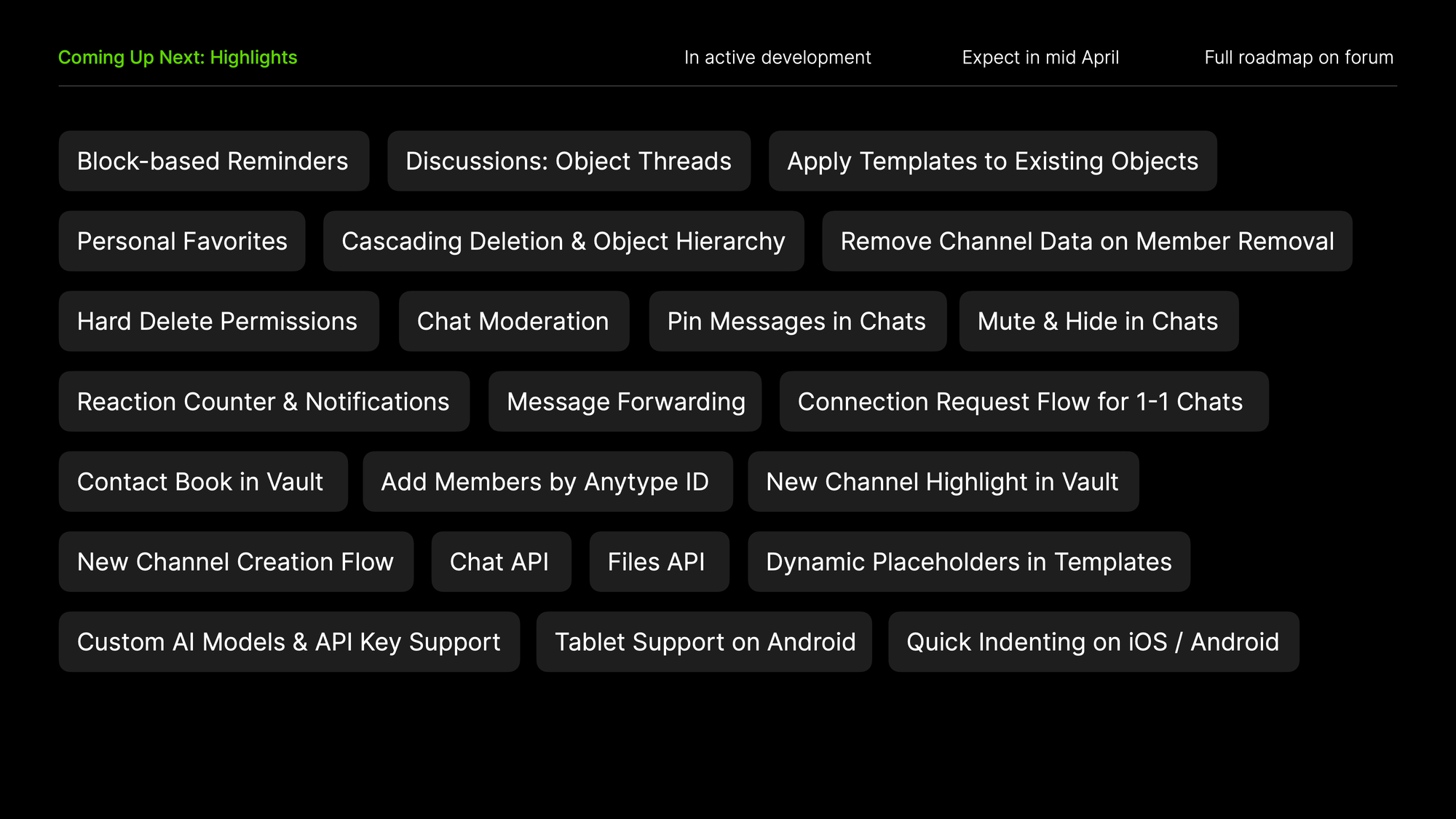
Coming Up Next covers what we're actively building for the next public release — roughly a two-month cycle, with six releases planned per year. If something is in this list, you can hold us to it.
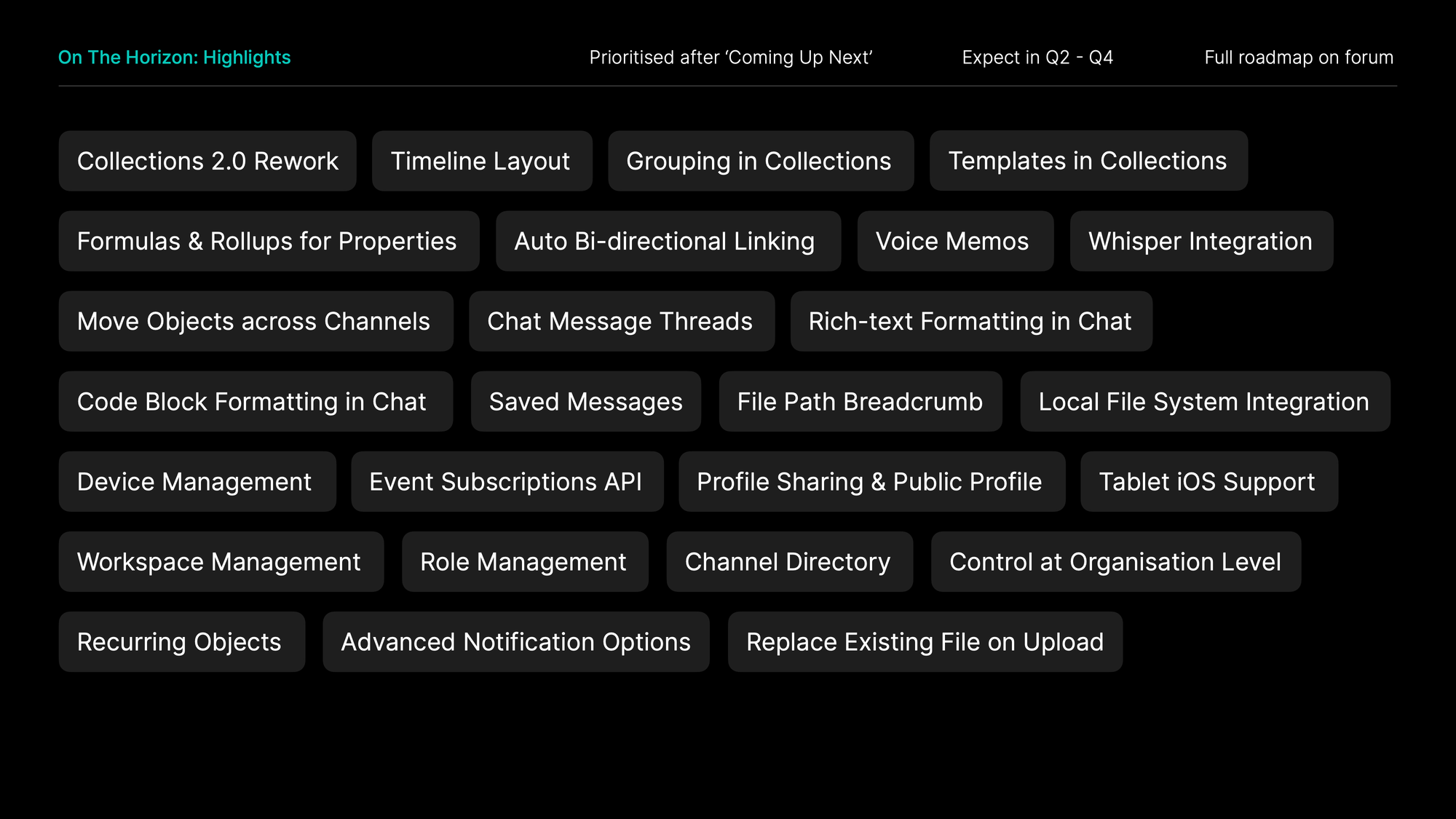
On the Horizon covers what comes after — things we're confident about, targeted somewhere in the four-to-ten-month window, but with less certainty on exact timing.
In Exploration is for experiments in progress: things we believe are possible, but that we're still prototyping and haven't fully mapped out. We want to be transparent about what we're exploring, but these don't come with timelines or promises.
Ongoing Upgrades is an evergreen list of continuous improvements that happen across every release — search performance, sync reliability, app stability, battery usage, import/export, and infrastructure health. These are always in motion, just not always tied to a specific release.
For the next release, targeted for mid-April, we're focused on: block-based reminders, object threads for collaboration directly on documents, applying templates to existing objects, personal favorites in shared spaces, and cascading deletion for cleaner space management.

Collections 2.0: A New Way to Think About Objects
This was the centrepiece of the Town Hall — and it sparked a lot of conversation.
Collections 2.0 isn't a single feature drop, and it's not a confirmed change just yet. It's an architectural direction we're actively exploring and prototyping, and we wanted to share our thinking with the community early. The process has already begun — Advanced Filters are part of it — but the bigger picture is still taking shape.
The core question we're asking ourselves: why must an object only have one type? What if, instead of deciding whether something is a type, a tag, a collection, or a query, you simply asked — what is this object related to? Context, not category, defines the object.
It's a meaningful shift in mental model, and there's a lot to work through: navigation, search, deletion, backwards compatibility, and more. Nothing here is final — and that's exactly why we want your input before we go further.
Watch the full Collections 2.0 walkthrough (18 min) starting at 32:15 in the Town Hall recording, or dive into the architectural write-up on the forum. We'd love to hear what you think.


AI and Anytype
AI came up in every part of the conversation — and we want to share how we're actually thinking about it.
There's a belief inside the team that AI is something you can't choose to ignore, even if you'd rather not engage. Whether you opt in or not, it shapes the world you're building in. So the question for us isn't whether to engage with AI, but how — in a way that's true to what Anytype stands for.
Ownership, data sovereignty, and user control are at the core of everything we do. When we apply that to AI, it means one thing above all: choice. You should be able to use no AI, local AI, cloud AI, or a hybrid stack — entirely on your terms. We believe the future won't be one AI model for everything, but a layered approach where different tools serve different needs.
Because your data is local-first, we're in an unusually strong position here. Your objects and their relationships are structured in a way that works well with machine reasoning — and your data stays private.
We're prototyping a new kind of primitive in Anytype — the ability to spin up a local agent (inspired by the open-source "open clone" concept) in seconds, using whatever API key you choose. You'd be able to interact with your Anytype objects as the agent's memory, and even create executable programs just by talking to it. This is early and experimental — but the direction is exciting.
Watch the full Town Hall recording: